EV range in winter — how far does it really go?
TL;DR:An EV's real-world winter range is typically 25-30 % below the official WLTP figure. A car rated at 450 km WLTP will more realistically do 315-340 km on a cold Danish winter day at motorway speeds with the cabin heater on. It is fully predictable, not a lottery — and one of the most important things to factor in before choosing an EV to lease.
Range is the first thing most people ask about with an EV — and the first thing that worries them. The spec sheet says 450 km, but what does the car actually do at minus five, doing 110 on the motorway, with the heating on? The short answer: less, but predictably less. Winter range is not a lottery. It follows physics you can calculate, and once you know the rule of thumb it holds across nearly every model. This guide explains why range drops in winter, gives you a rule you can trust, covers what a heat pump, speed and temperature really mean, works through the "1000 km test" in charging stops, and shows which EVs lose the least — and what it all means when choosing an EV to lease.
Why does range drop in winter?
Three things pull range down when it gets cold — and they act at the same time.
First, cabin heat. In a petrol car heat is almost free: the engine produces ample waste heat. An EV has no waste heat to give away, so it has to spend battery energy heating the cabin. On a cold morning, heating can draw several kilowatts while you sit at a red light — energy that would otherwise have been range.
Second, battery chemistry. A lithium-ion battery performs worse when cold. Internal resistance rises, and the car deliberately limits how hard the battery may be worked until it has warmed up. That is why you often notice lower performance and slower charging in the first kilometres on a freezing day.
Third, the physics around the car. Cold air is denser, so aerodynamic drag rises slightly. Tyres are stiffer and roll heavier until warmed up; winter tyres have higher rolling resistance. Slush and wet roads cost extra too. Each factor is small — together they are noticeable.
The key point is that none of this is a fault. It is physics that affects every EV, and it is why the official WLTP range — measured at 23 degrees under controlled conditions — always sits above what you experience on a cold January morning.
Rule of thumb: WLTP minus 25-30 %
The simplest and most reliable way to translate a spec figure into reality: subtract 25-30 % from the WLTP range for a realistic winter estimate.
A few concrete examples:
- An EV with 350 km WLTP realistically does 245-265 km on a cold winter day. - An EV with 450 km WLTP realistically does 315-340 km. - An EV with 550 km WLTP realistically does 385-415 km.
In summer the picture is very different. At mild temperatures and mixed driving, most EVs hit 85-95 % of WLTP. The full rule to remember: count on roughly 70-75 % of WLTP in winter and 85-95 % in summer.
The rule is deliberately coarse. The exact percentage depends on how cold it is, how fast you drive, and how much city versus motorway driving you do. But as a planning tool before you choose a car it holds: if your commute needs 250 km of winter range with no charging en route, look for a car with at least around 350 km WLTP — not one at 280 km, even if the spec sheet makes it look like it just about works.
Note that the gap between WLTP and real-world range is fairly constant across models. WLTP is still a fine figure for comparing cars to each other — you just should not read it as a guarantee for your own driving.
How a heat pump, speed and temperature affect range
Three factors matter more than anything else for how big the winter loss becomes.
Heat pump. A heat pump recycles heat instead of making it from scratch with a purely electric heating element. The difference is real: a car with a heat pump typically loses noticeably less range in the cold than an otherwise identical car without one. On many models it is standard; on others it is an option or tied to a particular trim. It is one of the most overlooked details when comparing two otherwise similar cars — and one of the most important to check on the actual offer before signing.
Speed. Aerodynamic drag rises with the square of speed. In practice that means motorway driving at 130 km/h uses markedly more energy per kilometre than country roads at 80. This is why an EV often goes further in town than on the motorway — the opposite of a petrol car. Keeping motorway speed a little down in winter recovers a large part of the winter loss.
Temperature. There is a difference between plus five and minus ten. The colder it is, the bigger the loss — both because the cabin needs more heat and because the battery works worse. The simplest countermeasure is preconditioning: start heating while the car is still plugged in at home, and you use grid power instead of battery power, setting off with a warm cabin and a battery already at working temperature. That is free range if you have a charger at home — one reason home charging matters so much for the real winter equation.
The "1000 km test": how many charging stops, really?
One of the most-asked questions: how many times do I have to charge on a long winter drive? Let us work it through for a typical long Danish trip — say from Copenhagen to Munich, around 1000 km on a cold winter day.
Take a mid-size EV with 450 km WLTP. In winter at motorway speed we realistically count on about 70 % — around 315 km on a full charge. But on a long trip you rarely charge from 0 to 100 %: you typically charge from around 10 % to 80 %, because the last 20 % charges slowly and wastes time. That gives roughly 220 km of usable range between stops on a cold day at speed.
Over 1000 km that is about four to five charging stops. With a fast-charging car (200+ kW), each stop typically takes 15-25 minutes from 10 to 80 %. With a slower charger (around 100 kW) each stop can easily take twice as long. This is where charging speed suddenly matters — not in everyday life, where you charge at home overnight, but precisely on the long winter trip.
Two things make the test milder than the numbers suggest. First, you would take breaks on a trip that long anyway — a charging stop and a coffee break can coincide. Second, the very first leg from home on a full battery counts extra, because you can precondition on grid power.
The conclusion: 1000 km in winter is entirely manageable in a modern EV, but it requires choosing a car with reasonable range and fast charging if you regularly drive that kind of trip. A small city car with 250 km WLTP can also do it, but with more and longer stops — fine for some, the last straw for others. It is an honest conversation with yourself about how often you really drive far.
Which EVs lose the least range
The winter loss is not the same for every EV. Three properties decide how well a car holds its range in the cold:
Heat pump. The single factor that matters most. A car with a heat pump loses noticeably less in the cold than one without. Always check whether a heat pump is included — either as standard or as part of the trim on the offer.
Efficient platform over raw power. Cars built for efficiency — good aerodynamics, moderate motor power, well-thought-out energy management — hold range better than performance-oriented models with lots of horsepower. The extra power costs efficiency, and that bites hardest in winter.
Battery size as a buffer. A car with a big battery still loses the same percentage in winter, but the absolute buffer is larger. A 30 % loss on an 80 kWh car leaves more usable range than 30 % on a 45 kWh car. If you regularly drive far in winter, a bigger battery is a real safety margin — not luxury.
The practical pattern: a mid-to-large EV with a heat pump and an efficient platform is the most robust choice if winter range weighs heavily for you. The very small city cars remain excellent for short, fixed commuting — but if your week includes long trips in freezing weather with no charging en route, choose the car by the winter figure, not the summer one.
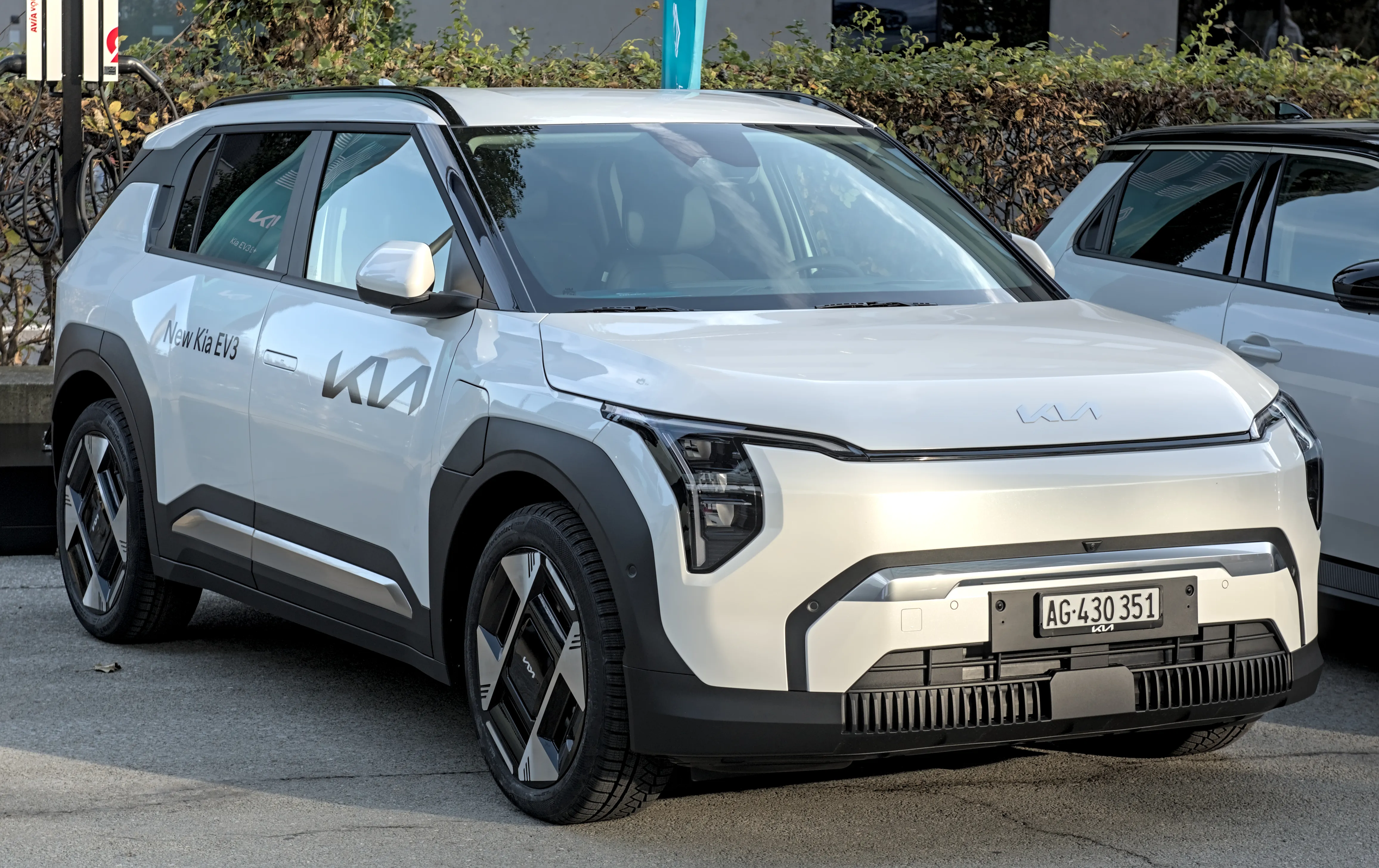
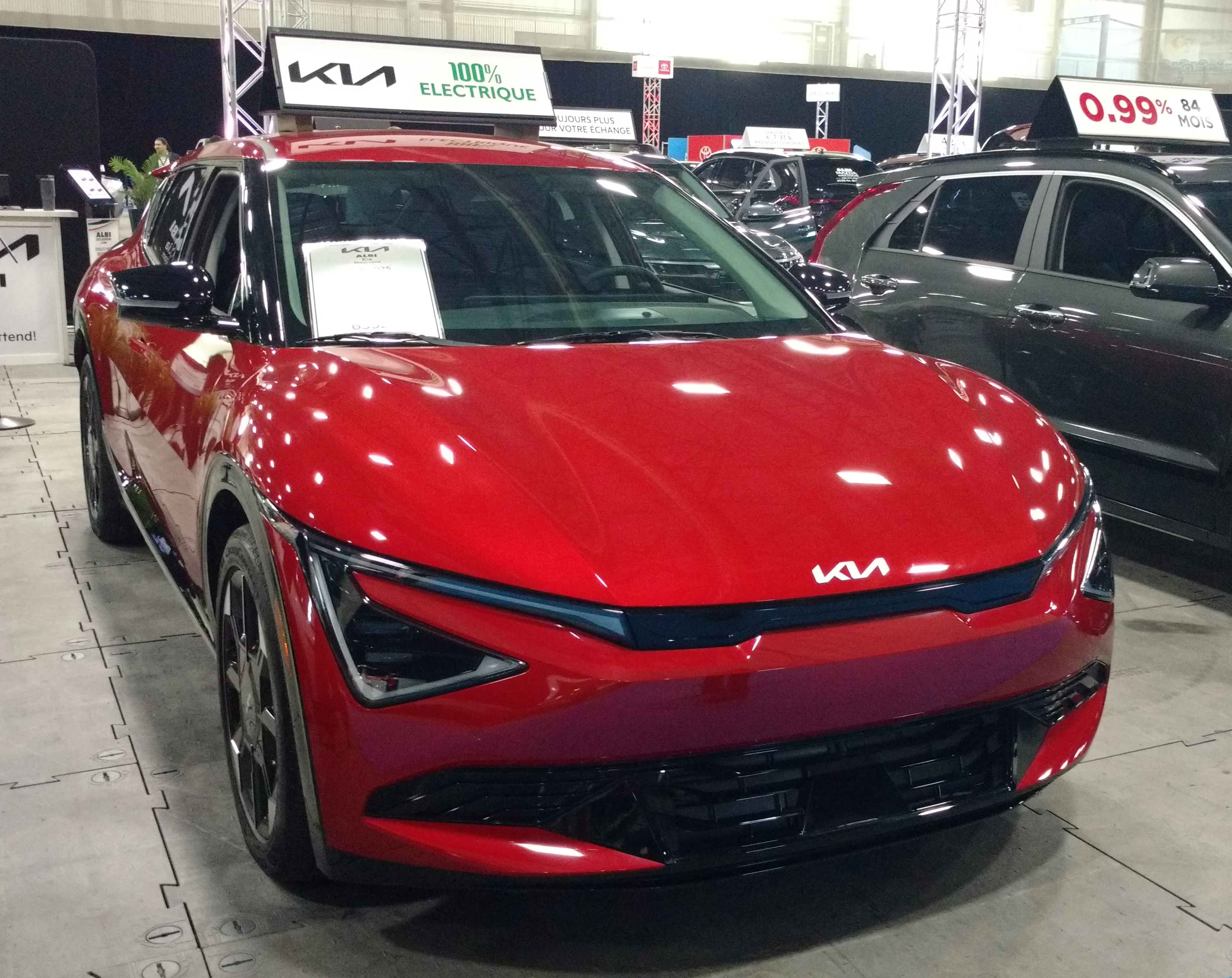
To see the EVs with the biggest battery and range that currently have active private leasing offers — the cars with the largest winter buffer you can actually act on today — they are gathered below, pulled straight from our database of current private EV leasing offers.
What it means for your leasing choice
When you lease, you typically commit for 36 or 48 months. That is four winters. Winter range is therefore not a detail you can check later — it is one of the decisive parameters before you sign.
Three concrete pieces of advice to take with you:
1. Choose the car by your winter need, not your summer need. Work out your longest fixed winter drive with no charging en route, and find the car whose WLTP minus 30 % still covers it with margin. It is cheaper to step up a model from the start than to discover every winter that you need an extra charging stop.
2. Check the heat pump on the specific offer. Two offers on the same model can differ on exactly this point depending on trim. It is one of the few spec points that directly affects your everyday range four winters running.
3. Factor home charging into the equation. With access to a charger at home you can precondition on grid power and set off with full, warm range every morning, sharply reducing the impact of the winter loss. Without a home charger, both battery size and charging speed weigh more heavily in your choice.
Winter range is tightly linked to two other things you should calculate before choosing: the overall economics of the deal and the green ownership tax that follows the car. To take the decision systematically rather than on gut feeling, our guide to comparing and choosing the right EV continues with a structured decision framework. For the full cost picture, see both EV leasing costs and green ownership tax for EVs in the related pages below.
Frequently asked questions
As a rule of thumb, an EV goes 25-30 % less in winter than its official WLTP range. A car rated at 450 km WLTP will realistically do 315-340 km on a cold Danish winter day at motorway speed with the cabin heater on. In summer most EVs hit 85-95 % of WLTP. The loss is predictable and affects every EV — it is physics, not a fault.
Three things act at once: the cabin must be heated with battery power because an EV has no engine waste heat; the battery's chemistry works worse when cold; and dense cold air plus stiffer tyres increase driving resistance. Each factor is small, but together they pull range down noticeably on a freezing day.
A heat pump recycles heat instead of making it from scratch with a purely electric heating element, so a car with a heat pump loses noticeably less range in the cold than an otherwise identical car without one. On many models it is standard; on others it is an option or tied to a particular trim. It is one of the most important details to check on the offer itself before signing a lease.
Yes. A mid-size EV with around 450 km WLTP realistically does about 220 km between charging stops on a cold day at motorway speed if you charge from roughly 10 to 80 %. That is about four to five stops over 1000 km. With a fast-charging car each stop takes 15-25 minutes and often coincides with a break you would take anyway. It is entirely manageable, but requires choosing a car with reasonable range and fast charging if you regularly drive that kind of trip.
Cars with a heat pump, an efficient platform over raw power, and a battery big enough to give a buffer hold up best. The percentage loss is roughly the same for all, but the absolute buffer is larger on a big-battery car: a 30 % loss on 80 kWh leaves more usable range than 30 % on 45 kWh. A mid-to-large EV with a heat pump and an efficient platform is the most robust choice if you regularly drive far in winter.
Yes. When you lease you typically commit for 36 or 48 months — that is four winters. Choose the car by your winter need, not your summer need: work out your longest fixed winter drive with no charging en route, and find a car whose WLTP minus 30 % still covers it with margin. Also check whether a heat pump is included on the specific offer, and whether you have access to a home charger where you can precondition on grid power.
Ready to find your next EV lease?